








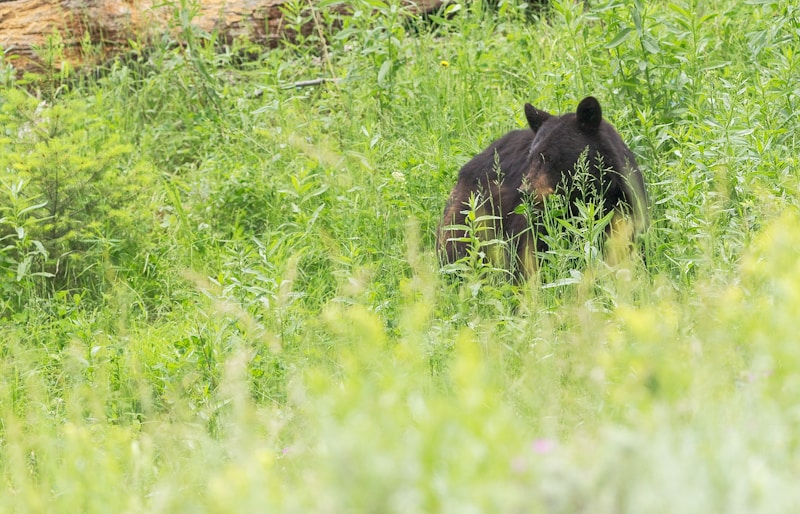
The Wisconsin Department of Natural Resources is reminding residents statewide to be aware of bears. With over 24,000 black bears in Wisconsin, early summer is the peak season for bear sightings as young bears step out on their own. Male bears are searching for mates and will travel up to 30 miles in the process.
Black bears are commonly found in northern Wisconsin, but their territory is expanding. The DNR says bear populations and sightings are increasing and expanding southward. They could show up in unexpected areas, which was the case on Tuesday, June 2 in Slinger. Black bear sightings have also been reported in Waukesha. Bears walking through residential neighborhoods are not out of the ordinary.
The DNR says black bears are naturally cautious animals that normally avoid contact with people. Bears can quickly learn to associate humans with food.
If a bear finds food, such as bird feed or garbage near your home or cabin, it will likely return for more. Bear visits are more likely to stop when food is no longer available. Bears will periodically check sites where food was once available, so it may take several days or weeks after a food source has been removed for a bear to move out of the area.